
StopStu’s Selections Of Great Whitewater Rafting Gear:
Before I begin, let me be clear of one absolutely fundamental fact—quality gear can decrease one’s risk on the river, but it will never substitute for one’s skills as a whitewater rafting guide. Before putting yourself at risk, and the lives of your fellow passenger rafters at risk, you better know what the hell you’re doing. If you don’t, then take a Professional Guide Course to learn the basics about rafting maneuvers and river hydrology.
That being said, Whitewater Rafting is a classic way to see the best a river has to offer as a group.
As an experience whitewater rafting guide with more than 15 years and 200 river—commercial and private—trips experience in the raft alone, I’ve guided a lot of rivers, at a variety of different flows, with many varieties of crews—from the experience to the beginner—and with a wide variety of rafts, gear, and equipment. The gear can be expensive, and yes, you can buy used, but that comes with its own problems—ESPECIALLY if it’s a used raft.
Raft technology has come a long way since this awesome sport kicked-off back in the 1940s using old surplus army bucket boats that remained in use through the 1960s. It was not until the 1972 Munich Olympics when Whitewater Paddling received a major boost in popularity, which encouraged major changes in both design and materials that completely changed the sport forever.
As for other gear, judge each gear item accordingly, but especially when it comes to PFDs and helmets, know that used versus new could mean the difference between life and death.
Whitewater Rafting List:

Whitewater Rafts
When purchasing a good raft, remember one very important thing, don’t settle for anything short of quality. It’s true, there are a lot of specifics to consider when buying a good boat, and there are A LOT of very tempting substitutes, but if your focus is price instead of quality, I personally guarantee it will come back and bite you in the ass.
Take my word for it, don’t ever buy a used raft unless you know exactly what to look for. If you’re number-crunching, I get it, then ask the seller to first blow-up a boat to its max and let it sit for 48hrs–if all the tubes are still tight, it’s better than most. BEWARE of floors with LOTS of patches. To replace a floor is more than half the price of a brand new boat, so again, consider buying brand new, you’ll save yourself a lot of frustration from riding down the river with unexpected leaks.
KEY FEATURES I LOOK FOR:
- Quality of materials and construction
- Longevity and low maintenance
- Durability and reliability
- Weight and size
- Other Details:
- High rockers at bow and stern for more fun and play
- At least 3 thwarts for anything 12ft and bigger.
- Easy-to-remove thwarts
- Leafield™ C7 valves
- Self-Bailing floors


SOTAR Rafts
SOTAR makes the best rafts in the industry, ask anyone. Their “exclusively developed lightweight heavy duty Urethane/Lexatron boat fabric lets us design welded seams without using glue in the construction of our boats,” is right off their website. And as a guide who has used a number of their rafts for commercial and personal use, I can say this–that material is super durable, slippery, and perfect for getting a raft out of many potentially dangerous situations, particularly stuck on rocks.
SPECS:
- Material: Urethane/Lexatron
- Valves: Leafield™ C7
- Thwarts: Hinge-n-Pin
- Floor: self-bailing with reinforced protection
PROS: Very long-lasting rafts, very difficult to puncture or damage and cause leaks.
CONS: none
HYSIDE Rafts
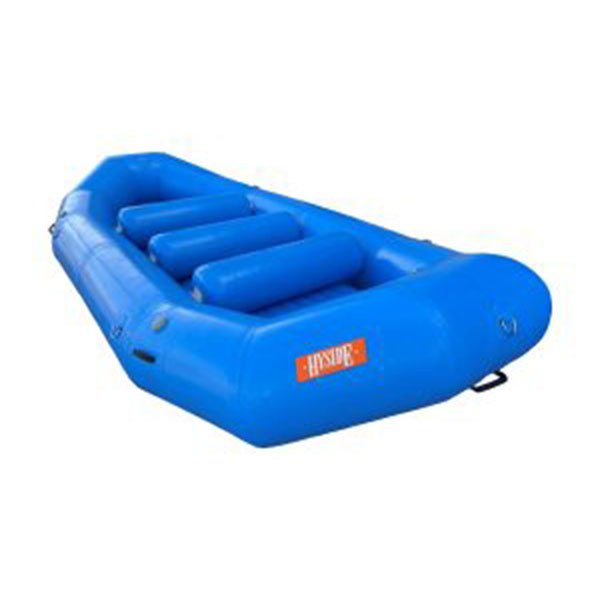
HYSIDE rafts are the most popular for rafting companies due to their near-Sotar quality but for a lower price. Because of their common and wide personal, commercial, and industrial uses, they have earned a reputation for quality and long-lasting. And as their design and construction has evolved to become nearly as competent as Sotar’s, they have gotten more expensive. And BTW, they do use a Urethane Spray to further protect the bottoms of their boats.
SPECS:
- Material: Hypalon fabric (CSM fabric)
- Valves: Leafield™ C7
- Thwarts: Hinge-n-Pin
- Floor: self-bailing with reinforced protection
PROS: Most common, easy to repair, easy to roll and store, proven history for longevity and durability.
CONS: none

NRS Rafts
NRS is one of the oldest names in the rafting industry with its founding as far back as 1977. They use similar CSM material like Hypalon, but they call their’s Pennel ORCA. They also make rafts with other materials such as PVC. AIRE Rafts and STAR rafts are now apart of NRS’ Raft Product lines.
SPECS:
- Material: Pennel Orca (NRS’ CSM fabric))
- Valves: Leafield™ C7
- Thwarts: NRS BAT for easy removal
- Floor: self-bailing with reinforced protection
PROS: 10-year retail warranty
CONS: none

MARAVIA rafts
AIRE and STAR are now part of NRS along with Tributary, but are primarily 2-thwart boats made out of PVC. Maravia’s claim to fame is for making boats for the Navy Seals, but also primarily deal in PVC materials.
SPECS:
- Material: PVC
- Valves: Leafield™ C7
- Thwarts: Tie-in, and hinge
- Floor: self-bailing with reinforced protection
PROS: lightweight, easier to carry, and a more diverse range of colors.
CONS: none
PFDs (Personal Floatation Devices)
I don’t mess around when it comes to safety gear. And when it comes to picking a PFD (Personal Floatation Device) for whitewater activities, a good fit is just as important as the materials used, construction, and dependability.
For a good fit, it helps to get a jacket that has a variety of adjustment straps in order to make that jacket properly fit the person who wears it, and pass the Pull Test: where one pulls a person out of the water by their shoulder straps without that PFD jacket sliding and/or coming off. So naturally the construction and materials should be strong enough to withstand the forces of the pull without ripping apart. The jacket needs to be tight enough to pass the Pull Test, and thanks to the latest in designs for Whitewater PFDs, the jackets have become much more comfortable in spite of the required snug fit. And they’ve allowed for greater mobility of the arms,which is especially important for swimming and self-rescues.
Finally, it has to keep a person afloat in waters with heavy hydraulics. High Floatation vests used to be much bigger and bulkier, but thanks to the latest materials and design, vests have become more streamlined and still maintain high floatation.
These are my favorite vests and brands whether you are Guiding, Touring, or just need a basic commercial-styled vest for your fellow paddlers.
KEY FEATURES I LOOK FOR:
- Fit & Comfort
- Floatation in water
- Quality of materials and construction
- Functionality and Features

STOHLQUIST Descent Rescue Vest
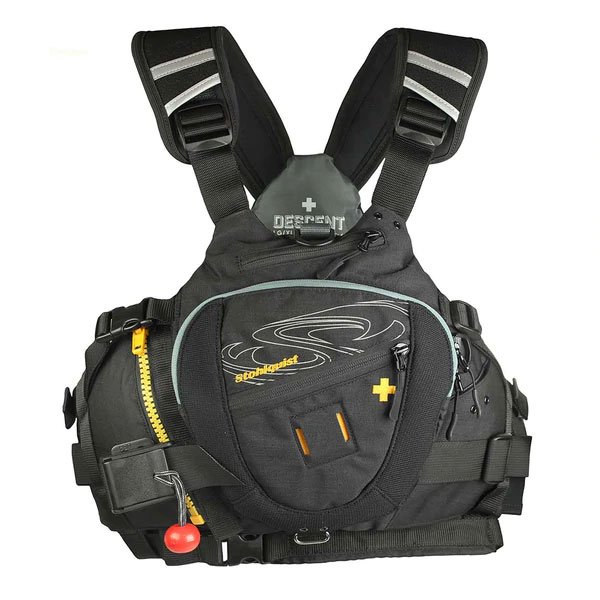
I purchased my first Stohlquist Descent Rescue PFD back in 2009. I’ve used it for more than 150 Whitewater rafting and Whitewater kayaking trips. I’m still using it today!
As a WW rafting guide and whitewater kayaker, I absolutely love this jacket. My favorite aspect is the design which allows me full-range-of-motion when using my arms for paddle strokes and swimming. I can dive into deep pools underwater with ease, but it has just enough floatation to shoot me back up to the surface if I stop swimming, and I weigh 250lbs. And, its comfortable!
SPECS:
- Type: V PFD, High-float
- Style: Rescue PFD
- Material: PVC foam and Cordura shell w/Nylon inner liner
- Weight: 2.8lbs
- Buoyancy: 17lbs
- Test Shoulder Harness: 740lbs
PROS: lightweight, sturdy, comfortable, easy for paddling and swimming, and high floatation. Also, the new version has stronger shoulder straps than previous version!
CONS: early version had weaker and thinner shoulder straps.

NRS Big Water V PFDs
NRS has been the leader of Whitewater Gear since the 1980’s and for good reason.
I’m a huge fan of the latest version of their Commercial Type V PFDs. I own previous versions that date all the way back to the 90s and have been on countless trips and keep on surviving use and abuse.
This latest version is similar to the WW Kayak style with more freedom in the arms and shoulders for paddling and swimming, while still retaining the high floatation rating they have. The thick shoulder straps are essential because they get a lot of use.
SPECS:
- Type: V PFD, High-float
- Style: Commercial PFD
- Material: 420-Denier Nylon
- Weight: 2.8lbs
- Buoyancy: 25lbs
- Test Shoulder Harness: unknown
PROS: Proven history, quality of materials and construction, longevity.
CONS: pricey, but worth it! Other than that, none.
KOKATAT Guide Rescue Vest
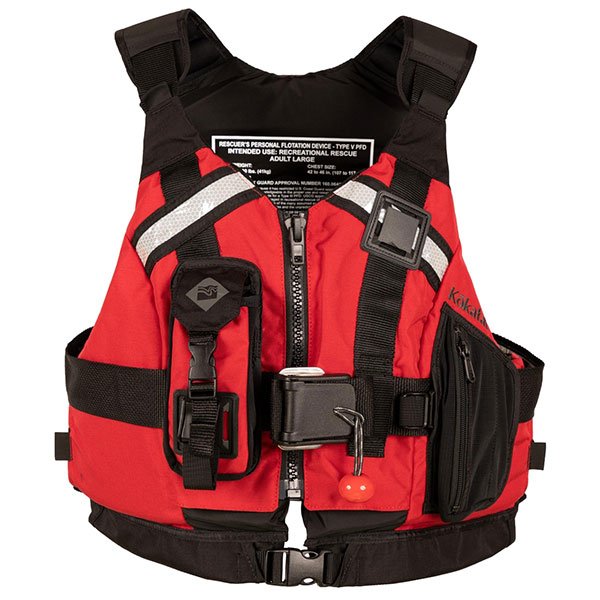
THIS is a general review of all Kokotat PFDs since I haven’t owned one for more then ten years, but know of many persons who do own one and I am familiar with them.
Kokotat is another company with a longstanding tradition for great Whitewater products.
My first vest was the Kokotat Guide Rescue PFD and it was outstanding.
I’d still be using one of their vests if I hadn’t encountered the STOHLQUIST Descent, which fits better for my build, and functions better for my more aggressive style of river running.
SPECS:
- Type: V PFD, High-float
- Style: Commercial, Guide, Rescue, and Touring PFDs
- Material: Cordura shell w/Nylon inner liner
- Weight: Varies
- Buoyancy: 16lbs
- Test Shoulder Harness: unknown
PROS: Proven history, quality of materials and construction, longevity
CONS: none
ASTRAL GreenJacket Vest
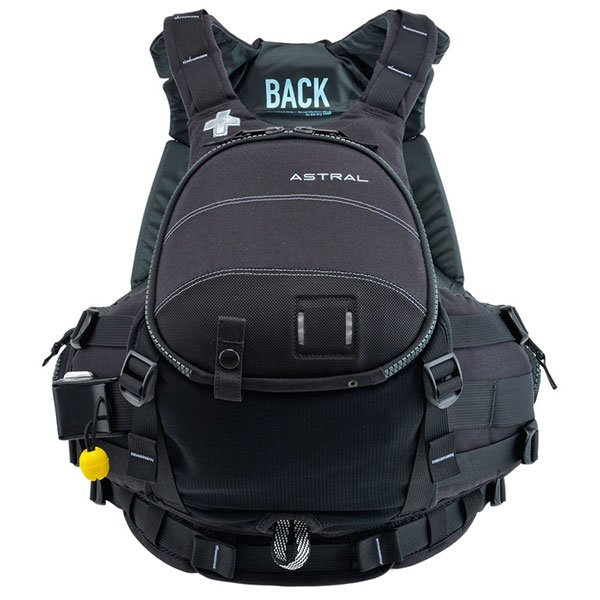
I’ve never used an Astral, but have many friends who have them. IT’s probably the most common PFD I see fellow whitewater enthusiasts use after NRS and Kokotat.
I’ve considered their Green Jacket a few times and when it comes time to upgrade it could be a contender with the Stohlquist Descent.
SPECS:
- Type: V PFD, High-float
- Style: Commercial, Guide, Rescue, and Touring PFDs
- Material: PVC foam, Cordura shell w/Nylon inner liner
- Weight: Varies
- Buoyancy: 16.5lbs
- Test Shoulder Harness: unknown
PROS: As common as NRS
CONS: unknown
Paddles for Whitewater Rafting
NOT OARS, we’re talking about paddles. Oars are different, but the two are commonly mismatched in speech by those unfamiliar with the differences in reference to whitewater rafting. An easy category for Whitewater Rafters. There’s really only a couple choices for paddles and styles in the industry and one can’t go wrong with either.
KEY FEATURES I LOOK FOR:
- Quality of materials and construction
- Sturdiness
- Reliability

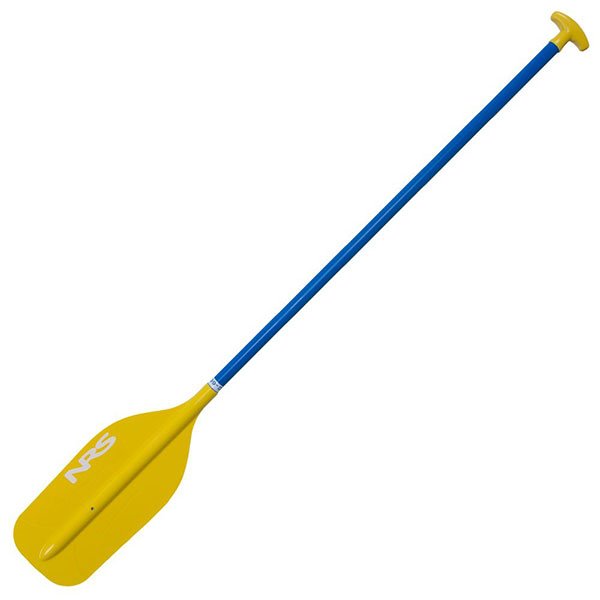
NRS PTE Economy Paddle
This is your basic standard Whitewater Rafting paddle.
SPECS:
- Size: 4-5’
- Materials: ABS blade, Aluminum shaft
- Weight: 794g
PROS: basic WW paddle, lots of size options available
CONS: bends easily under more aggressive use

NRS PTC Canoe/Raft Paddle
This is your basic whitewater rafting paddle with a reinforced shaft. Less likely to bend during aggressive paddling. Tested. Proven. ‘Nuf said.
SPECS:
- Size: 4-5’
- Materials: ABS blade, coated high-strength Aluminum shaft
- Weight: 1021g
PROS: reinforced ww paddle, lots of size options available
CONS: none

NRS PT Guide Paddle
This is specially designed for Rafting Guides w/ a stronger and longer shaft to accommodate the wide-range of paddle strokes required to navigate a boat.
SPECS:
- Size: 5’-6’
- Materials: ABS blade & polycarbonate, 1mm thick
- Aluminum shaft
- Weight: 1134g
PROS: heavily reinforced ww paddle, lots of size options available
CONS: none

Carlisle Standard Paddle
This is your basic standard Whitewater Rafting paddle comparable to the NRS PTE Economy Paddle, except that the shaft is ⅛” thinner.
SPECS:
- Size: 5’
- Materials: High-impact polypropylene and fully clad aluminum
- Weight: 794g
PROS: basic WW paddle
CONS: bends easily under more aggressive use
Helmets:
Helmet protection needs no explanation, especially when faced with the unpredictability of whitewater hydraulics and the fact that one can’t see most of the dangers of the river, such as the ones below the surface.
A couple key brands stand out as well as models of helmets from your basic protection to your more advanced aggressive whitewater protection. Let’s take a look at a few favorites.
KEY FEATURES I LOOK FOR:
- Fit & Comfort
- Floatation in water
- Quality of materials and construction
- Functionality and Features

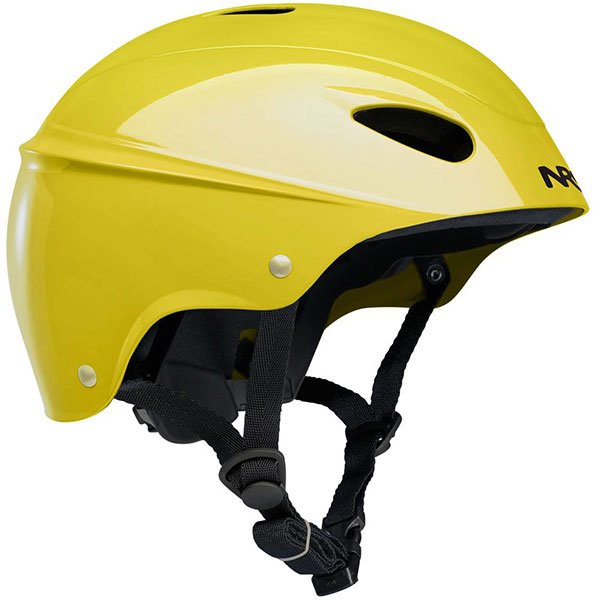
NRS Havoc Livery Helmet
This is the low-end basic whitewater rafting helmet intended for passenger-paddlers in less aggressive waters.
It’s intended as a very basic protection and should not be used for whitewater kayaking.
SPECS:
- Use: Whitewater Rafting
- Weight: 1lb
- Materials: ABS plastic, closed-cell EVA foam
- Vented: Yes
- Ear-Coverage: No
- Certification: CE EN 1385
PROS: basic helmet protection and inexpensive.
CONS: Not recommended for aggressive waters and whitewater kayaking.
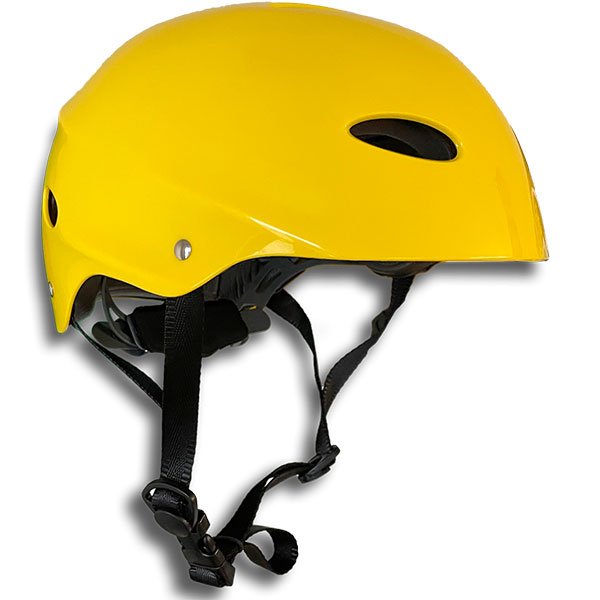
HYSIDE Pro CE Helmet
Low-end basic whitewater helmet intended for passenger-paddlers and less aggressive waters.
Basic protection for whitewater rafting and should not be used for whitewater kayaking.
SPECS:
- Use: Whitewater Rafting
- Weight: 1lb
- Materials: ABS plastic, and EVA foam
- Vented: Yes
- Ear-Coverage: No
- Certification: CE EN 1385
PROS: basic helmet protection and inexpensive.
CONS: Not recommended for aggressive waters and whitewater kayaking.
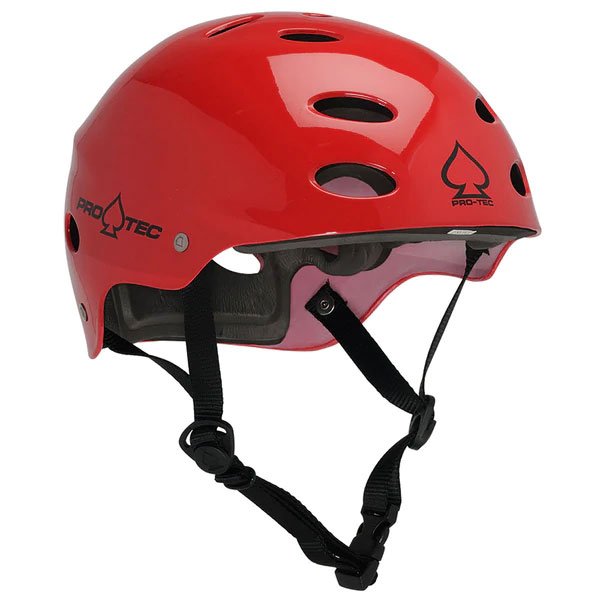
PRO-TEC Ace Water helmet
Low-end basic whitewater helmet intended for passenger-paddlers and less aggressive waters.
Basic protection for whitewater rafting and should not be used for whitewater kayaking.
SPECS:
- Use: Whitewater Rafting
- Weight: 1lb
- Materials: ABS plastic, and Dual Density EVA foam
- Vented: Yes, lots
- Ear-Coverage: No
- Certification: CE EN 1385
PROS: basic helmet protection and inexpensive.
CONS: Not recommended for aggressive waters and whitewater kayaking.
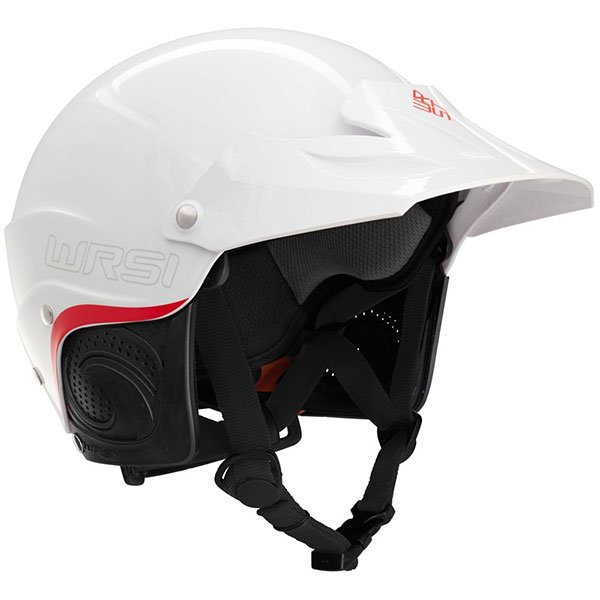
WRSI Current Pro helmet
Design for aggressive whitewater enthusiasts that include kayakers as well as rafters.
SPECS:
- Use: Whitewater Rafting
- Weight: 1lb
- Materials: ABS plastic with a polyurethane sub-shell, and EVA foam
- Vented: Yes, lots
- Ear-Coverage: optional
- Certification: CE EN 1385
PROS: More customizable fit, more comfortable, and stronger helmet.
CONS: none.
Pumps & Dry Bags:
Let me offer some advice in lieu of the many different options available for pumps. If you’re under a budget, get the Carlson 6” Barrel Pump pump for blowing up rafts, topping off tubes, and can easily be stowed for use on the river if needed—just stow in a drybag to keep water out of it.
If you can afford more, get a Carlson 6” Barrel Pump for topping off and an electric Blow-Pro Pump for filling up the raft.
In all my experience, buying the smaller barrel pumps simply because they are “easier to stow” isn’t worth the time it takes to blow-up a leaky tube if you choose to continue running the river instead of fixing the leak. Small barrel pumps are not worth the extra time and extra effort required to use them.
As for Dry Bags, lots of great brands and size-options out there!
KEY FEATURES I LOOK FOR:
- Quality of materials and construction
- Sturdiness during use
- Dependability


CARLSON Barrel Pumps
These are the industry standard for Whitewater Rafting pumps.
They are available in the 4” and 6” sizes. They are reliable and sturdy. They are easy to use. They can survive a lot of abuse.
In spite of options, nothing compares to these pumps. And whether you use them to blow up a raft, or just top-off the tubes, these pumps will save you time and effort over any other competitor version.
Oh yeah, don’t forget the 10-year warranty.
SPECS:
- Sizes: 4” and 6”
- Volume per stroke: 0.9 and 2 gal, respectively
- Warranty: 10 years
PROS: quality, reliable, quick and easy to use with less effort, and a 10-year warranty
CONS: none that I’ve encountered.

BLOW-PRO Pump
If you only raft a couple times a year, using a barrel pump to inflate a raft is part of the experience. But if you’re like those of us you raft more than a dozen times per year, it’s nice to have some assistance.
This electric pump is FANTASTIC!!
We’ve tried a number of other electric pumps available, and even a “blower” purchased at Home Depot with a modified nozzle to fit the C7 valves.
But the recently developed Blow-Pro sold by Hyside will very quickly become the new standard. ITs simply incredible how quickly this blows up a raft, and how tight the tubes are when its finished. When we top-off with a barrel pump, it requires ⅓ the effort it used to with our Home Depot modified blower that was better than any other pump we found.
SPECS:
- 1600 watts -110v
- Achieves 2.9 psi pressure
- inflates/deflates
- Very flexible 3’ hose extends to 9’
PROS: impressively powerful, inflates and deflates, small and compact
CONS: none that I’ve encoutnered

NRS Drybags
NRS is the industry standard for dry bags. I have two that have survived for more than 20 years and they still get lots of use. They also have more variety in sizes and functionality. And the materials are heavy-duty.
Never had leaks, tears, or rips. Great bags
SPECS:
- Sizes: variety from 2L to 140L
- Materials: varies with bag style
- Closure: roll-top and buckle
- Waterproof
- Options: shoulder straps
PROS: quality heavy-duty materials and construction, heavier and durable.
CONS: none that I’ve encountered
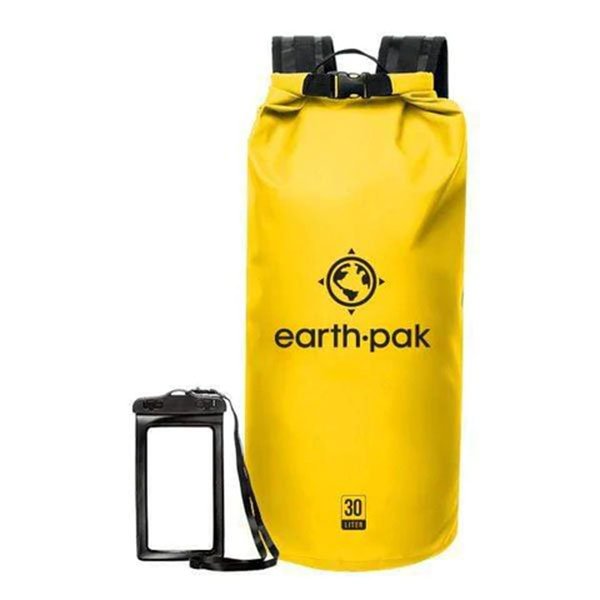
EARTH PAK Dry Bags
Earth Pak was founded in 2015.
Their bags use a lighter material than NRS, but their intended use is supposed to include be more versatile than just WW rafting. Great for multi-sport activities.
So far, and after two years of use, no leaks, tears, rips.
SPECS:
- Sizes: variety from 10L to 55L
- Materials: varies with bag style
- Closure: roll-top and buckle
- Waterproof
- Options: shoulder straps, waist strap, pockets, transparent material
PROS: lighter material and good construction
CONS: none, that I’ve encoutnered.
Whitewater Rafting Essentials
The following raft essentials help to ensure a safe rafting experience for you and your passengers.
A word of advice…don’t buy cheap—quality gear can be all the difference in a quicker recovery from an incident and even avoiding an incident altogether. You want gear that functions correctly, again, and again, and again without incident.
Provides a safe Whitewater rafting experience for passengers, especially newbies.
KEY FEATURES I LOOK FOR:
- Quality of materials and construction
- Dependability
- Safety First!


NRS Cam Straps
NRS is the industry standard in cam straps for whitewater sports.
The strap material is thicker and tough, which makes their straps easier to tighten, to hold, and to loosen, again.
SPECS:
- Size: 1’ – 20’ x 1’ width and
- Materials: UV-protected polypropylene webbing, and die-cast treated zinc buckle
- Weight: varies
- Breaking Strength: 1500lbs
PROS: Quality and reliability, sized etched into the strap for easy identification
CONS: losing them and never having enough
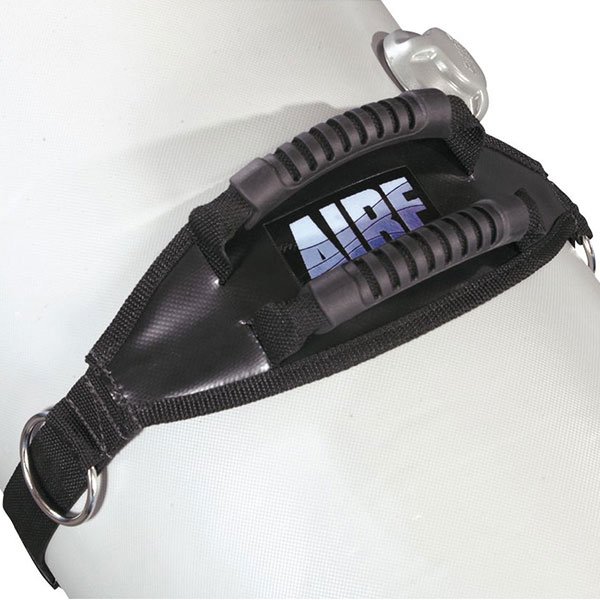
AIRE Thwart Handles
Only ones in the industry that I have found. I like having these for my paddles, especially the less-experienced ones. The unexpected often happens with Whitewater Rafting, and it’s usually so quick one rarely has time to react. These handles have saved some of my less experienced paddlers from getting tossed out of the boat, which have proven to be invaluable during shallow water trips whewn it can be unpredictably bumpy.
SPECS:
- Size: 1.5” strap w/ 4.5” x 12” pad
- Materials: pvc pad, rubber handles, and nylon webbing
- Two handles and two D-Rings per
PROS: Two handles on one strap, d-rings on both sides of handles, quality design and construction
CONS: none that I’ve encountered
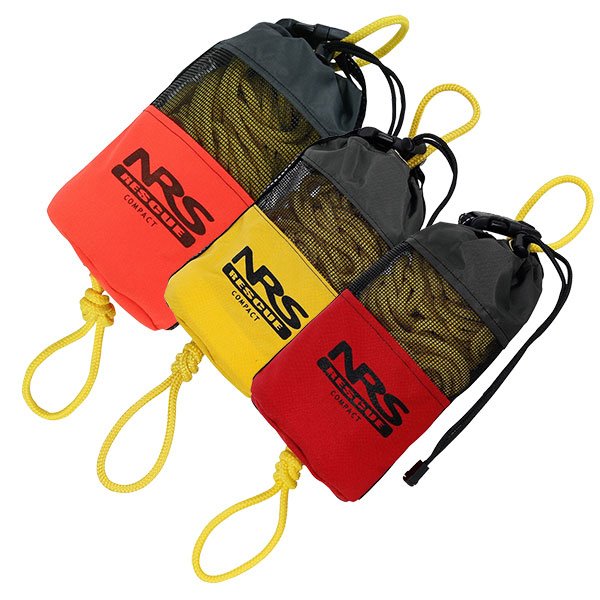
NRS Throw Rope Bags
NRS is the industry standard for dry bags. I have two that have survived for more than 20 years and they still get lots of use. They also have more variety in sizes and functionality. And the materials are heavy-duty.
Never had leaks, tears, or rips. Great bags
SPECS:
- Sizes: variety from 2L to 140L
- Materials: varies with bag style
- Closure: roll-top and buckle
- Waterproof
- Options: shoulder straps
PROS: quality heavy-duty materials and construction, heavier and durable.
CONS: none that I’ve encountered
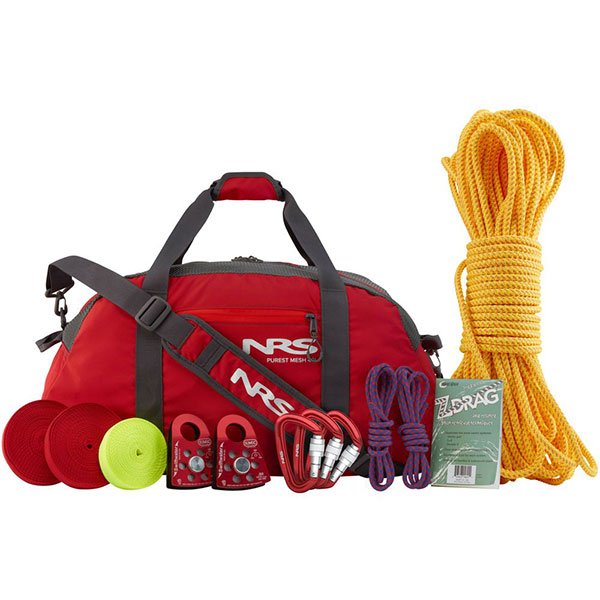
NRS Z-Drag Kit
Earth Pak was founded in 2015.
Their bags use a lighter material than NRS, but their intended use is supposed to include be more versatile than just WW rafting. Great for multi-sport activities.
So far, and after two years of use, no leaks, tears, rips.
SPECS:
- Sizes: variety from 10L to 55L
- Materials: varies with bag style
- Closure: roll-top and buckle
- Waterproof
- Options: shoulder straps, waist strap, pockets, transparent material
PROS: lighter material and good construction
CONS: none, that I’ve encoutnered.